How we assessed buyer fit
What Matters Most Up Front
Buy for open work area before storage volume. A sewing station works when the machine, chair, and fabric all fit without constant shuffling. The table that looks organized but blocks your knees or pushes fabric off the edge turns every session into cleanup.
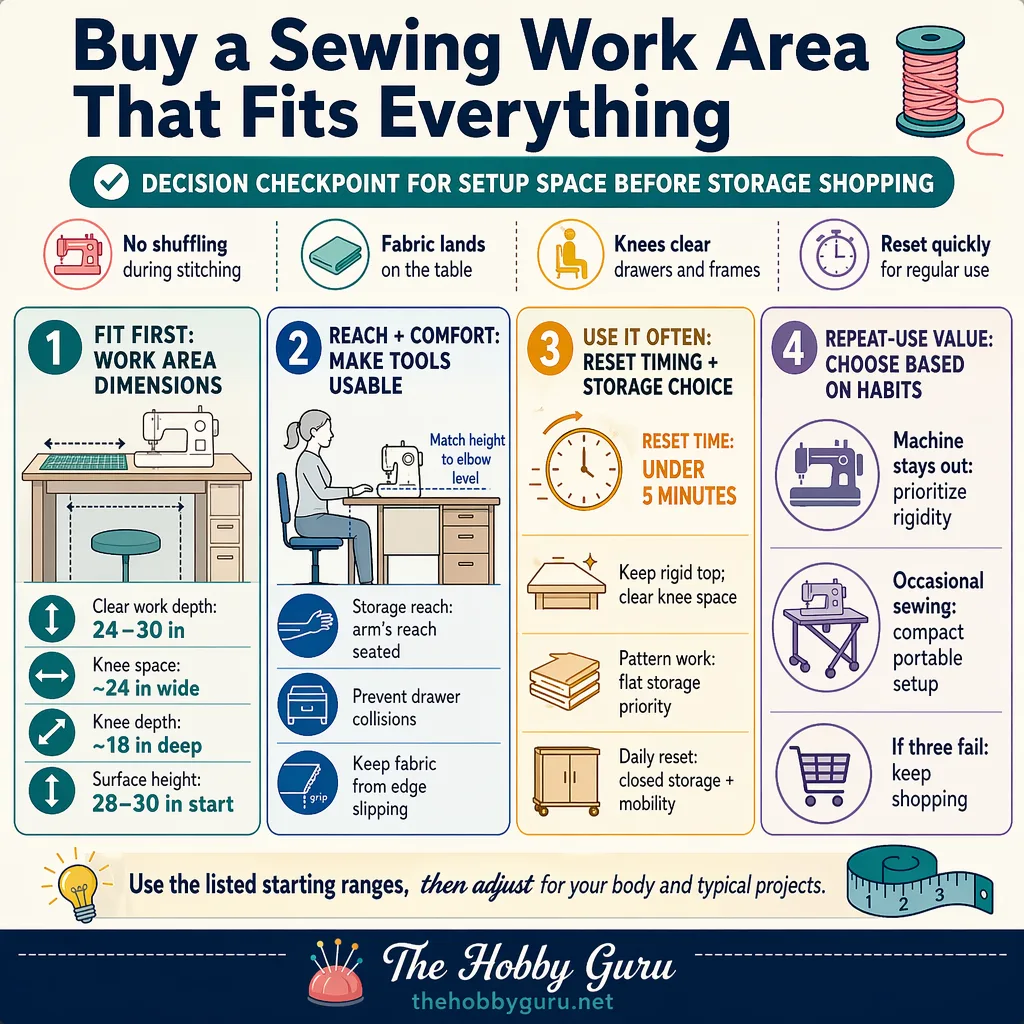
| Decision point | Good target | Why it matters |
|---|---|---|
| Clear work depth | 24 to 30 inches | Leaves room for the machine and a fabric landing zone |
| Knee space | About 24 inches wide and 18 inches deep | Keeps the chair comfortable and prevents drawer collisions |
| Surface height | 28 to 30 inches as a starting point, then match elbow height | Reduces shoulder lift and hand strain |
| Storage reach | Arm’s reach from the seated spot | Keeps daily tools in the work zone |
| Reset time | Under 5 minutes | A fast reset keeps the setup in regular use |
First-time sewer decision checklist
- If the machine stays out, prioritize a rigid top and clear knee space.
- If pattern work is part of the plan, prioritize flat storage and a broader surface.
- If the room resets daily, prioritize closed storage and simple mobility.
- If the sewing stays occasional, keep the setup compact and portable.
- If three of these fail, keep shopping.
How to Compare Your Options
Compare by sewing method, not by cabinet style. Hand sewing, machine sewing, and pattern-based sewing ask for different shapes of space. The right comparison saves movement, while the wrong one adds steps every time a project starts.
| Sewing style | What the setup must do | Storage that helps most | Main drawback |
|---|---|---|---|
| Hand sewing | Keep a small, bright, tidy area with a portable kit | Shallow tray or small caddy | Small footprint, but slow on larger projects |
| Machine sewing | Hold the machine steady and leave room for cloth feed and cords | Shallow drawers for bobbins, feet, and thread | Heavier and less portable |
| Pattern-based sewing | Give fabric and pattern pieces a flat landing zone | Folders, envelopes, and shallow bins | Uses the most space and needs the most sorting |
Machine sewing rewards a rigid table. Pattern work rewards flatness. Hand sewing rewards portability. The mistake is building for the machine and forgetting the cutting and sorting that happen around it.
The Choice That Shapes the Rest
Decide whether one table handles everything or whether the room splits tasks. A mixed-use surface stays simple, but separate zones win when cutting, stitching, and storage happen at different times.
| Scenario | Favor | Skip |
|---|---|---|
| Mending | Compact top, shallow storage, portable notions | Oversized cutting zone |
| Garment making | Wider flat top, pattern files, room for pressing workflow | Deep cubbies that steal knee space |
| Crafting and mixed projects | Modular bins, wipeable surface, mobile caddy | Fixed compartments that trap scraps |
A single bench works when the projects stay small and short. A split setup works when fabric needs to stay flat while tools, patterns, and finished pieces move through the room. The trade-off is simple, more flexibility means more space, while a tighter all-in-one station means faster setup.
The Reader Scenario Map
Use the history as context, not as a shopping rule. Sewing furniture grew out of changing tools, changing homes, and changing project sizes, and those shifts explain why the best modern setup still looks like a hybrid.
Contents
- First filter for depth, height, and knee space
- Comparison of hand, machine, and pattern-based sewing
- Scenario fit for mending, garments, and crafting
- History that explains modern sewing-room habits
- Pattern storage, upkeep, and buying checks
Industrial Revolution
The industrial shift moved sewing from mostly hand work to machine-centered work. That change demanded a stable table, a seated working height, and room for cloth to feed without catching on clutter. The big trade-off was immediate, a fixed station handled more work, but it gave up portability.
20th century onward
Home sewing in the 20th century pushed the bench into shared rooms, spare corners, and closets. Tables started doubling as storage cabinets because fabric, patterns, and notions had to disappear between sessions. The downside is just as clear, built-in storage turns into dead space if the room changes or the drawers are too deep for daily tools.
Women’s Sewing
Women’s sewing shaped the compact domestic sewing station because the work lived alongside household routines. That legacy still fits modern apartments and multipurpose rooms, where a setup must reset quickly after dinner, homework, or office work. Compactness keeps the room usable, but it limits cutting space for larger garments.
Garment construction
Garment construction needs a broader clear zone than mending. Seams, facings, interfacing, and pressed pieces need a landing spot, and the table edge matters as much as the top. A narrow bench saves floor space, but it forces more stacking and more handling, which slows the work.
Garment sewing also rewards a short path to pressing. If the iron lives across the room, every seam gets an extra trip. That hidden friction matters more than decorative storage.
Patterns and fitting
Patterns and fitting reward flat storage and quick access to rulers, weights, tracing paper, clips, and fit notes. Deep bins bury tissue patterns and bend corner points, so shallow drawers, folders, or envelopes work better. The trade-off is more sorting up front, but less scavenging later.
Pattern-and-fitting quick fixes
- Store each active pattern in one envelope or folder.
- Keep a seam gauge, ruler, chalk, and marking tools together.
- Pin fit notes to the project folder, not to a separate drawer.
- Reserve 18 to 24 inches of clean space for tracing and alterations.
- Keep one bin for works in progress, not for mixed scraps.
Beginner Project Ladder
- Hemming and button fixes
- Pillowcases and simple tote bags
- Aprons and lined pouches
- Elastic-waist skirts and basic tops
- Fitted garments and multi-piece projects
The ladder matters because each step asks for more flat space, more sorting, and better storage discipline. A setup that handles step 2 cleanly often feels cramped by step 4.
Maintenance and Upkeep Considerations
Choose the setup that cleans fastest, because sewing leaves small debris everywhere. Thread bits, chalk dust, paper fibers, and fusible residue collect in drawer corners and along table edges. If cleanup takes longer than a quick sweep, the space stops getting used.
Closed storage blocks dust, but it slows access. Open bins speed the work, but they collect clutter and tiny offcuts. Shallow drawers and labeled trays keep the daily reset short, which matters more than display.
A secondhand table needs a close look at the middle span, not just the edges. Sewing loads sit where the machine and fabric live, so center sag and sticky slides matter more than cosmetic wear. Hinges, drawer runners, and casters also need to move smoothly, because any bind gets annoying during every project change.
Compatibility and Setup Limits
Measure the machine, the chair, and the room together. A table that fits the machine base but not the extension bed wastes the surface you paid for. Leave about 24 inches of knee width and 18 inches of knee depth, and keep 24 to 30 inches of clear top where fabric can lie flat.
Cord routing matters more than many buyers expect. If the outlet sits behind the machine and the cable has no clean path, the setup gets awkward fast. If a shelf hangs overhead, confirm the thread path and spool height clear the space before you commit.
Chair arms cause plenty of bad buys. If the chair cannot slide under the table without bumping drawers or braces, the station fails at the first sit-down. Tight fits save floor space, but they raise friction every single session.
Who Should Skip This
Skip a dedicated sewing workbench if the sewing is occasional or the room changes roles every day. A few repairs fit a small caddy and a clear tabletop. A dining room, office, or guest room fits better with a folding surface or rolling cart than with a permanent bench.
That alternative keeps the room flexible, but it adds setup time and makes pattern storage harder. If fabric already lives elsewhere and projects stay small, a dedicated station turns into extra furniture instead of a useful tool.
Where Sewing Workbench Setup Is Worth Paying For
Pay for the parts that cut resets, not the parts that look finished. A better sewing station earns its keep in four places, a flatter top, a sturdier frame, storage that opens without fighting the chair, and project organization that keeps patterns separate from notions.
| Worth paying for | Why it earns its keep | Trade-off |
|---|---|---|
| Flat, rigid top | Supports machine sewing and cutting without wobble | Heavier and less movable |
| Shallow, labeled storage | Keeps daily tools reachable | Demands better sorting |
| Dedicated pattern storage | Protects tissue and fit notes | Uses more wall or drawer space |
| Mobility where needed | Helps room reset | Wheels and hinges add bulk |
The return is not luxury, it is fewer interruptions. A prettier finish does nothing if the machine bumps the wall or the drawer stack steals knee room. Spend where the setup saves time every week, not where it only looks tidy on day one.
Final Buying Checklist
- Measure the machine, pedal, chair, and extension bed.
- Confirm 24 to 30 inches of clear work depth.
- Confirm about 24 inches of knee width and 18 inches of knee depth.
- Leave one flat zone for patterns or cutting.
- Put daily tools in shallow, reachable storage.
- Keep pattern tissue and fit notes in folders or envelopes.
- Make cord access simple and direct.
- Decide whether the setup folds, rolls, or stays fixed.
- Choose a top that wipes clean fast.
If two of those checks fail, keep looking. A sewing bench should make the next project easier to start, not harder to clear.
Common Mistakes to Avoid
- Buying drawer count before usable surface. Storage volume without reach becomes clutter.
- Ignoring chair clearance. If the chair hits the table, the setup gets annoying immediately.
- Treating pattern tissue like spare paper. It tears in deep bins and loses corners.
- Mixing daily notions with long-term fabric stash. One drawer turns into a catch-all fast.
- Choosing a wobbly folding top for cutting. Precision work needs a surface that does not shift.
- Leaving no cleanup path. Sewing leaves thread, chalk, and scraps, so the room needs a reset zone.
Most guides treat storage volume as the win. That is wrong because reach and surface shape decide whether the setup gets used. A table that fits the machine but not the fabric is a bad buy.
The Practical Answer
Match the setup to the work you repeat.
- Mending and hand sewing fit a compact surface, shallow storage, and a portable kit.
- Machine sewing and garment work justify a stable workbench, clear top depth, and flat pattern storage.
- Mixed-use rooms do better with a foldable or modular setup, but they give up some speed and layout ease.
Buy the smallest setup that still leaves fabric flat, tools reachable, and the chair comfortable. That is the line that keeps sewing practical instead of fussy.
Frequently Asked Questions
How much table space does sewing need?
A sewing table works best with 24 to 30 inches of clear depth. That gives the machine, the fabric feed, and a small landing zone enough room to work without constant rearranging.
Are drawers better than open shelves for sewing storage?
Shallow drawers beat open shelves for daily tools. Open shelves work for fabric and bins that stay sorted, but they collect dust and invite clutter if you reach for them every session.
What matters more, storage or surface space?
Surface space matters first. Storage helps only after the table fits the machine, chair, and fabric path without crowding the work.
Is a folding table good enough for sewing?
A folding table works for occasional mending and light repair work. It falls short for pattern layout, garment cutting, and any task that needs a steady top.
How should patterns and fitting tools be stored?
Store patterns flat in envelopes, folders, or shallow drawers, and keep rulers, chalk, seam gauges, and weights together in one project kit. That keeps the next fitting step from turning into a search.
See Also
If you want to move from general advice into actual product choices, start with Brother or Singer Sewing Machine Buying Guide, Janome or Bernina Sewing Machine Buying Guide, and What to Look for in a Hobby Flashlight or Lamp.
For a wider picture after the basics, Walking Foot Quilting vs Even Feed Foot: Which One Fits Your Quilting Best? and Janome Memory Craft 400E Review: A Focused Embroidery Machine for Home Use are the next places to read.