What Matters Most Up Front
Start with how often the machine will sit ready on the table, not how impressive the brand name sounds. Janome wins when you want a straightforward machine that gets out of the way and stays easy to bring back to life after a few days off. Bernina wins when sewing is a regular habit and the extra control shows up in the work you actually finish.
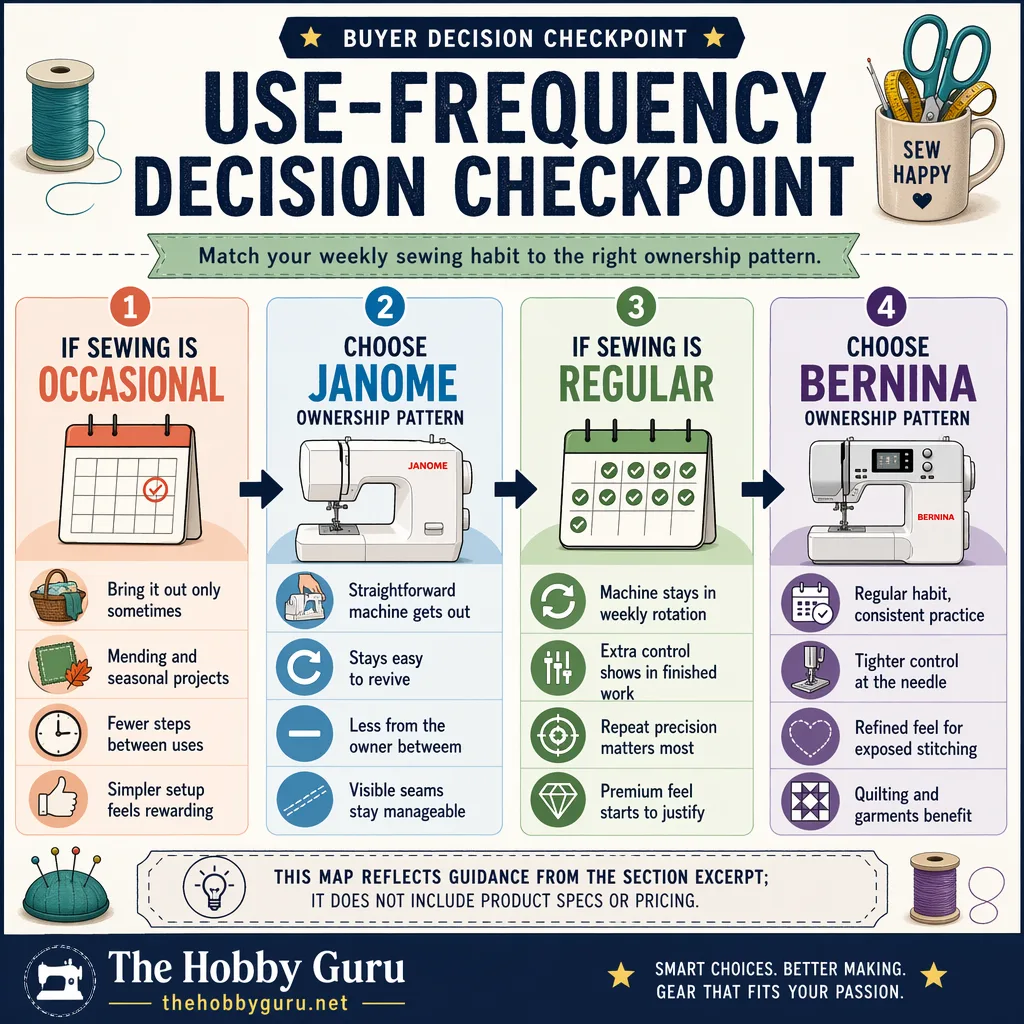
The first filter: use frequency
If the machine comes out only for mending, seasonal projects, and a few home decor jobs, Janome fits the better ownership pattern. It asks less from the owner between projects and rewards a simpler setup.
If the machine stays in rotation every week, Bernina starts to justify its premium feel. The value comes from repeat precision, not from owning a fancier logo.
The second filter: visible work
Visible seams change the decision fast. Topstitching, quilting, and garment work with exposed stitching benefit from tighter control and a more refined feel at the needle.
Hidden seams do not need the same level of machine refinement. For that kind of sewing, a good Janome keeps the process practical.
How to Compare Your Options
Compare the exact model sheet, then compare the ownership burden around it. Brand reputation hides real differences in controls, included feet, and how much setup work the machine asks for every time it comes out of storage.
Stitch control matters more than stitch count
Stitch count does not finish a hem or align a quilt block. Look for the controls you will touch constantly, such as needle position, presser foot pressure, and smooth adjustment of stitch length and width.
More decorative stitches do not improve everyday sewing. A smaller set of controls that respond cleanly beats a long list you never use.
The box contents change the value
Included feet, extension tables, and specialty attachments change the real cost of ownership. A machine that ships with the tools you need for your main projects gives more value than a machine that expects extra purchases right away.
This point matters more with Bernina, because the premium path makes sense only when the accessory path is complete. A bare machine head does not tell the whole story.
Service access belongs in the comparison
A sewing machine that needs dealer attention should have a dealer you trust nearby. That matters more with premium machines because the owner pays for the machine and then pays again in time if service is inconvenient.
A simpler machine that stays easy to service earns a real advantage for hobby use. The machine you can keep running gets used more.
What You Give Up Either Way
Accept that neither brand gives a perfect answer. Janome gives up some of the refined control and premium feel that precision sewists want. Bernina gives up simplicity and a lower-commitment ownership path.
Most guides frame Bernina as the automatic upgrade. That is wrong. Premium ownership only wins when the machine is used enough to justify the accessory and service discipline that comes with it.
What Janome gives up
Janome gives up some of the polished feel that comes with a higher-end precision machine. That trade-off matters on visible seams and repetitive detail work where small improvements in control feel obvious.
The upside is easy ownership. The downside is less reason to spend extra just to chase prestige.
What Bernina gives up
Bernina gives up convenience for casual sewing. The machine asks for a clearer plan around accessories, service, and regular use.
That is the wrong trade if the machine spends long stretches in storage. Premium control only pays back when the machine stays active.
The Use-Case Map
Match the machine to the room and the job, not to a vague wish for the “better” brand. The cleanest comparison anchor is a simpler midrange machine that already handles straight seams and zigzag without complaint. If that machine still covers your work, neither Janome nor Bernina earns a premium just because the badge looks nicer.
| Use case | Better fit | Why it fits |
|---|---|---|
| Basic mending and household repairs | Janome | Lower setup friction and a simpler return-to-use pattern |
| Quilt piecing and visible topstitching | Bernina | Precision and control matter more here |
| Shared hobby room or family use | Janome | Easier handoff and less intimidation for mixed users |
| Dedicated sewing station with regular projects | Bernina | The premium workflow gets repeated enough to pay back |
| Rare sewing, closet storage, occasional holidays only | Janome | Less maintenance choreography between sessions |
A machine that stays threaded and ready gets used more than one that requires a ritual every time. That is the quiet reason Janome wins many hobby rooms.
Where Janome Or Bernina Sewing Machine Is Worth Paying For
Pay for the workflow, not the badge. That rule removes a lot of unnecessary spending and puts the money into the part of the machine you touch every session.
Pay for Bernina when the machine sits at the center of serious piecing, tailoring, or visible finishing work. The premium only makes sense when the machine saves small amounts of time and frustration over and over again.
Pay for Janome when you want a dependable workhorse that leaves room in the budget for thread, fabric, feet, and storage. That path fits sewing rooms where flexibility matters more than prestige.
Used machines need a closer accessory check than new ones. A premium head with missing feet or a weak service record stops being a bargain fast. The machine body is only part of the ownership cost.
Upkeep to Plan For
Choose the machine whose cleaning and service rhythm you will actually keep. Sewing machines reward lint removal, correct needle changes, and an organized accessory setup. They also punish neglect with frustration long before they fail outright.
Bernina ownership makes sense when the machine will get steady care and a real service path. Janome fits better when you want a machine that asks less between projects.
Keep these routines in mind
- Clear lint from the bobbin area and feed path on schedule.
- Change needles before they start pushing fabric instead of cutting it cleanly.
- Store feet and specialty parts together so the machine stays ready.
- Keep the manual with the machine, not in a drawer somewhere else.
- Plan service access before you need it, especially on a premium machine.
The hidden cost is downtime, not just money. A machine waiting for adjustment stops a project as surely as a broken part does.
Published Details Worth Checking
Read the exact model sheet before the logo or the price tag. Brand loyalty hides real differences, and the wrong control set wastes more time than a modest feature gap ever does.
Check these details before you decide
- Included presser feet and specialty attachments
- Needle position options and stitch controls
- Presser foot pressure, if the model publishes it
- Free-arm access and workspace around the needle
- Automatic thread cutter, knee lift, or other workflow features you use
- Authorized service access and dealer support
- Compatibility with any accessories you already own
The box contents matter more than brochure language. A machine that includes the tools you will touch every week beats a prettier feature list every time.
When Another Option Makes More Sense
Skip both brands if the machine will live a light-duty life. A simpler machine fits better when sewing happens a few times a year, when portability matters more than precision, or when the goal is basic mending with the least possible overhead.
Another option also makes sense if the machine will teach beginners, travel to classes, or live in a closet between short projects. In those cases, the premium path adds weight without adding enough use.
A premium sewing machine earns its keep through repetition. If your project list stays short, the smarter buy is the machine that stays easy to pull out and put away.
Final Buying Checklist
Use this checklist before you commit:
- I sew enough to use the machine weekly or close to it.
- My projects need either lower setup friction or finer control.
- I know the exact model, not just the brand.
- The included feet and attachments match my work.
- I have a service path that is realistic for future upkeep.
- I accept the cleaning and accessory routine that comes with the machine.
- I will use the machine more than I will think about owning it.
If three or more items stay blank, keep shopping. The brand is not ready to carry the decision by itself.
Common Mistakes to Avoid
Buy the machine for the work, not the reputation. That rule avoids the most expensive errors.
- Buying by brand name alone. The model decides the controls, accessories, and real fit.
- Paying for stitch counts instead of useful controls. More stitches do not improve straight seams or clean hems.
- Ignoring accessory completeness. Missing feet turn a premium machine into an incomplete setup.
- Treating service access as optional. It is part of ownership, especially at the higher end.
- Assuming Bernina always wins because it costs more. That is wrong for casual sewing and mixed household use.
- Treating Janome as a compromise by default. Janome wins when the machine needs to stay easy to own and easy to use.
A better machine on paper loses to a machine that gets used without friction. That is the mistake to avoid.
Decision Recap
Pick Janome if you want the safer all-around buy for general sewing, mending, craft work, and lower-friction ownership. It fits homes where the machine gets used in bursts and then stored without much fuss.
Pick Bernina if you sew often, care about precise stitch behavior, and plan to keep the machine in regular rotation. The premium path makes sense only when the workflow gets repeated enough to pay back.
The clean rule is simple: choose the machine that stays threaded, reachable, and ready. That is the one you will actually finish projects with.
Frequently Asked Questions
Is Janome easier to own than Bernina?
Yes. Janome fits easier ownership because it asks less from the setup, accessory, and service side of the equation.
Which brand is better for quilting?
Bernina fits quilting better when piecing accuracy and visible detail matter. Janome fits casual quilting and mixed sewing better when low-friction ownership wins.
Does Bernina make sense for occasional sewing?
No. Bernina does not fit occasional sewing well because the premium control and upkeep logic do not pay back at low use.
Should I buy based on brand or model?
Buy based on the exact model first. The model decides the features, included accessories, and day-to-day feel.
What is the biggest hidden cost?
Accessories and service access. The machine head is only part of the ownership budget, and missing feet or inconvenient service changes the total cost fast.
Is a used premium machine a smart buy?
Yes, if the exact accessories are present and service history is clear. A used premium machine with missing parts stops being a bargain quickly.
What matters more, stitch count or controls?
Controls matter more. Stitch count looks impressive, but the controls you touch every session decide how easy the machine is to live with.
See Also
If you want to move from general advice into actual product choices, start with Brother or Singer Sewing Machine Buying Guide, Sewing Machine or Serger Buying Guide, and How to Choose a Hobby Vacuum.
For a wider picture after the basics, Best Steam Irons for Quilters in 2026 and Janome Memory Craft 400E Review: A Focused Embroidery Machine for Home Use are the next places to read.