Start With the Main Constraint
Start with how much friction the stitches need, not with loyalty to one material. Wood grips slick yarn, holds loose stitches in place, and keeps pauses from turning into runaway loops. Metal clears the lane for speed, sharp tips, and cleaner entry into tight stitches.
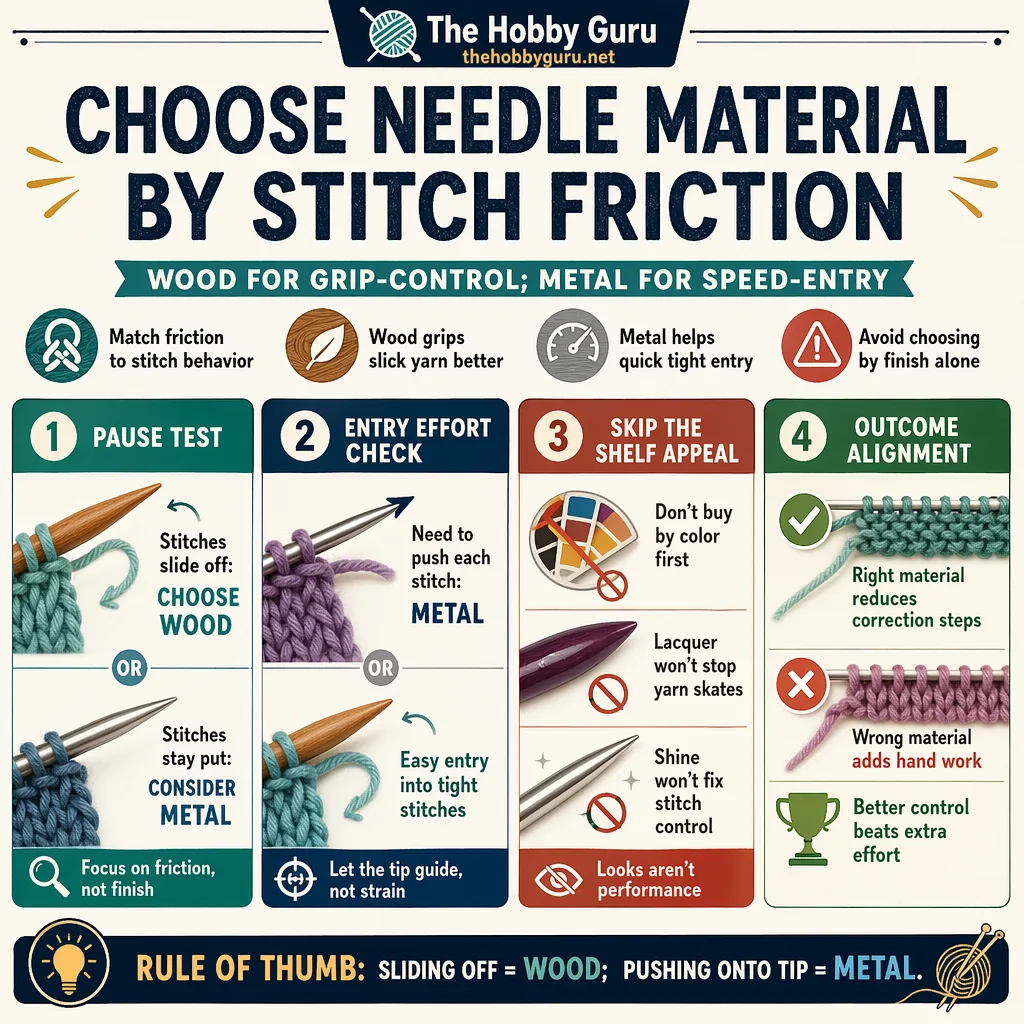
A simple rule works here. If stitches slide off when you pause, choose wood. If you have to push every stitch onto the tip, choose metal. The wrong material turns into extra hand work, while the right one removes that correction step.
The common mistake is buying by color or finish first. A pretty lacquer does nothing for a yarn that skates on the shaft, and a shiny metal finish does nothing for a project that needs more stitch control. The needle has to match the stitch behavior before it matches the shelf appeal.
How to Weigh the Options
Compare wood and metal on five things: friction, tip shape, noise, weight, and upkeep. Those are the details that change daily knitting, not the marketing language on a package. A good-looking needle with a rough join loses faster than a plain needle that glides cleanly.
- Friction: Wood keeps stitches from racing ahead. Metal lets the yarn move with less resistance.
- Tip shape: Metal usually wins for very fine entry into lace, decreases, and tight stitches. Wood works better when the yarn grabs too easily and needs restraint.
- Noise: Wood stays quiet. Metal clicks more on hard tabletops and in lap knitting.
- Weight feel: Wood feels easier in the hand over long rows. Metal feels steadier and more planted.
- Upkeep: Wood asks for dry storage and gentler handling. Metal asks for wipe-downs when oils and lint slow the glide.
The finish matters after the first few sessions. Hand lotion, fiber fuzz, and dust change glide more than many buyers expect. That shift shows up before any visible wear does, so the best material choice still needs a clean surface to stay useful.
The Trade-Off to Weigh
The trade-off is control versus speed. Wood slows the stitch just enough to keep it parked on the needle, which helps with slippery yarn and casual pauses. Metal lets stitches travel faster, which helps on long stockinette stretches and lace rows, but the same glide exposes loose tension and dropped stitches sooner.
That difference shows up most clearly on repetitive fabric. A metal needle trims a little resistance from every stitch, so a plain body panel moves faster. A wood needle trims correction work, so ribbing, colorwork, and slippery yarn stay calmer. The faster material feels better on some projects and worse on others because it changes what happens during every pause.
Noise and temperature belong in this trade-off too. Metal sounds louder and feels colder in a drafty room. Wood stays quieter and warmer, which matters in shared spaces and late-night knitting sessions.
The Use-Case Map
Match the material to the kind of rows you knit most often. The project type tells you more than the craft aisle ever will.
| Project habit | Better fit | Why it wins |
|---|---|---|
| Slippery yarn or loose tension | Wood | More grip keeps stitches from sliding away |
| Lace, socks, sharp decreases | Metal | Sharper points enter tight stitches cleanly |
| Colorwork or ribbing | Wood | Extra control keeps multiple working yarns orderly |
| Fast stockinette | Metal | Lower friction speeds up repeated stitches |
| Shared spaces or quiet rooms | Wood | Less clicking, less distraction |
| Magic loop or short circular work | Depends on the join and tip length | The cable and point shape control the feel more than the shaft material |
A lot of frustration comes from blaming the material when the real problem is the format. A short circular that fights your hand, or a cable that resists flattening, changes the feel far more than wood versus metal does. If the pattern calls for short-circumference knitting, length and cable behavior outrank the shaft material.
Proof Points to Check for Wood Or Metal Knitting Needle
Read the listing like a tool spec sheet. Ignore adjectives and look for the details that change how the needle behaves after the first hour.
- U.S. and metric sizing: Both matter. A pattern that calls for U.S. 6 still needs the correct millimeter size.
- Tip photos or taper descriptions: The tip controls ease of entry more than the body does.
- Join close-ups on circulars or interchangeables: A flush connection prevents snags at the exact spot that gets repeated thousands of times.
- Finish description: Look for plain language about polished, lacquered, anodized, or unfinished surfaces.
- Material naming: If the maker names the wood species or metal type, that detail helps predict feel and stiffness.
- Size markings: Clear markings save time when several needles live in one pouch.
A listing that hides the join hides the most common trouble spot. A needle can feel great in the hand and still snag at the transition. That one flaw changes the whole session, so close-up proof beats vague claims every time.
Maintenance and Upkeep Considerations
Wood asks for dry storage and careful handling. Metal asks for wipe-downs and scratch awareness. That difference changes total ownership because friction loss from neglect shows up in every row.
Keep wood in a dry sleeve, away from damp project bags, direct sunlight, and radiator heat. Heavy knocks in a notions pouch ding the tips and wear the finish faster than casual use does. A roughened wood surface starts to lose the smooth, controlled feel that made it attractive in the first place.
Metal tolerates daily handling better, but skin oil, hand lotion, and lint slow the glide on polished shafts. A quick wipe restores the feel. Scratches matter more on metal because they show up as drag points on fine yarn.
The hidden cost is not replacement, it is friction. A neglected needle changes how the yarn moves, and once that change starts, every row feels different. Maintenance belongs in the buying decision because it protects the exact behavior you paid for.
What to Verify Before Buying
Check the format before the material. A perfect wood needle in the wrong length or construction still creates a bad setup.
- Straight, circular, double-pointed, or interchangeable: The project decides the format first.
- Needle length: Match the length to the stitch count and the way you hold the work.
- Cable or shaft flexibility: Circular and interchangeable needles need a connection that feels smooth under load.
- Pattern requirements: Lace, socks, or dense ribbing demand more tip precision than plain fabric.
- Size labeling: Confirm the U.S. and mm sizes so gauge changes do not slip in through a label mismatch.
A 10-inch straight needle and a 40-inch circular solve different problems even at the same material. Material choice never fixes a format mismatch. The right build does more for comfort than the prettier shaft finish ever will.
Who Should Skip This
Skip wood if you knit lace, work with very slick yarn, or want the fastest possible slide. Skip metal if you knit in quiet spaces, manage splitty yarn, or need more control at every pause. Those are not small preferences, they are the core of the knitting experience.
Skip both if the real issue is grip shape or needle length. A hybrid or composite needle solves some jobs better than a pure wood or pure metal set because it separates shaft control from tip glide. That narrower fit beats forcing one material to do everything.
The buying mistake here is treating wood versus metal as the whole decision. It is only one layer. If the shape, length, or join is wrong, the material choice gets buried under the bigger problem.
Quick Checklist
Use this as the final pass before you choose.
- Do stitches slide off your current needles during pauses?
- Do you need sharper points for lace or decreases?
- Do you knit in shared spaces and want less clicking?
- Do you work mostly with slippery yarn or split-prone yarn?
- Will the needles live in a dry case or a busy project bag?
- Does the pattern require a specific format, length, or size?
Three or more wood answers point to wood. Three or more metal answers point to metal. Mixed answers point to owning one of each and assigning each set a job.
Common Mistakes to Avoid
Most guides sort wood for beginners and metal for advanced knitters. That rule is wrong because the real split is control versus glide. A beginner knitting slippery yarn benefits from wood, and an advanced lace knitter on fine points benefits from metal.
- Choosing by empty-handed feel alone: A needle that feels smooth in the aisle behaves differently under yarn tension.
- Ignoring the join: On circulars, a rough join changes the whole row.
- Assuming metal always means faster knitting: A blunt tip or snaggy cable stops speed faster than shaft material does.
- Buying one set for every project: One grippy set and one slick set covers more work than one universal compromise.
- Treating maintenance as optional: Dirty or worn finishes change friction enough to affect gauge consistency and rhythm.
The join or cable snag gets blamed on the wrong part all the time. That snag slows knitting more than the shaft material does when it is poorly made. The lesson is simple: check the connection first, then judge the material.
The Practical Answer
Choose wood for control, quiet, and slippery yarn. Choose metal for speed, sharp tips, and lace or dense stitch work. That split covers the two main buyer types cleanly.
Control-first knitters get more value from wood because it reduces stitch escape and steadies loose tension. Speed-first knitters get more value from metal because it removes drag and keeps fine work moving. If your projects bounce between both, keep one of each and stop asking one material to do every job.
The best choice is the one that cuts corrections on the project you knit most. Pretty finish, brand loyalty, and shelf appeal sit behind that rule.
Frequently Asked Questions
Are wood knitting needles better for beginners?
Wood helps beginners keep stitches from racing off the tips, especially on smooth yarn. Metal helps beginners who knit tightly and need less drag to get the needle through each stitch. The better beginner choice follows stitch control, not experience level.
Do metal needles make knitting faster?
Metal reduces friction, so stitches move faster and lace decreases enter more cleanly. That speed also exposes uneven tension and dropped-stitch mistakes sooner, which matters on long plain rows. Faster does not mean easier if the project needs more control.
Is bamboo the same as wood?
Bamboo belongs in the grip-first camp and behaves closer to wood than metal. It gives more control than a slick metal shaft and less slide than a polished metal surface. The finish and tip shape still matter more than the plant name.
What matters more on circular needles, material or join?
The join matters more. A smooth transition beats shaft material because the snag point affects every stitch that crosses it. If the join catches, the whole needle feels wrong.
Should one knitter own both wood and metal?
Yes, if the project mix changes. Wood covers slippery yarn and control work, and metal covers lace and fast stockinette. Two sets solve more jobs than one universal set.
See Also
If you want to move from general advice into actual product choices, start with Brother or Singer Sewing Machine Buying Guide, Janome or Bernina Sewing Machine Buying Guide, and Clear Packing Tape Craft Stickers: Complaints About Residue.
For a wider picture after the basics, Best Hot Glue Guns for Crafting: Full-Size and Detail Picks and Janome Memory Craft 400E Review: A Focused Embroidery Machine for Home Use are the next places to read.