The Brother GX37 Sewing Machine is a sensible buy for beginners and casual sewists who want more stitch variety than a bare-bones starter machine without moving into a computerized menu maze. The answer changes if you sew thick denim stacks, want embroidery, or want the simplest control set, because this model spends its value on flexibility, not brute strength. It also changes if accessory support matters more than stitch count, since the machine only pays off when the included feet, bobbins, and needle plan match the projects on your bench.
Quick Buyer-Fit Read
Most guides fixate on stitch count first. That is the wrong order here, because the GX37 wins or loses on workflow friction, not on the size of the stitch menu.
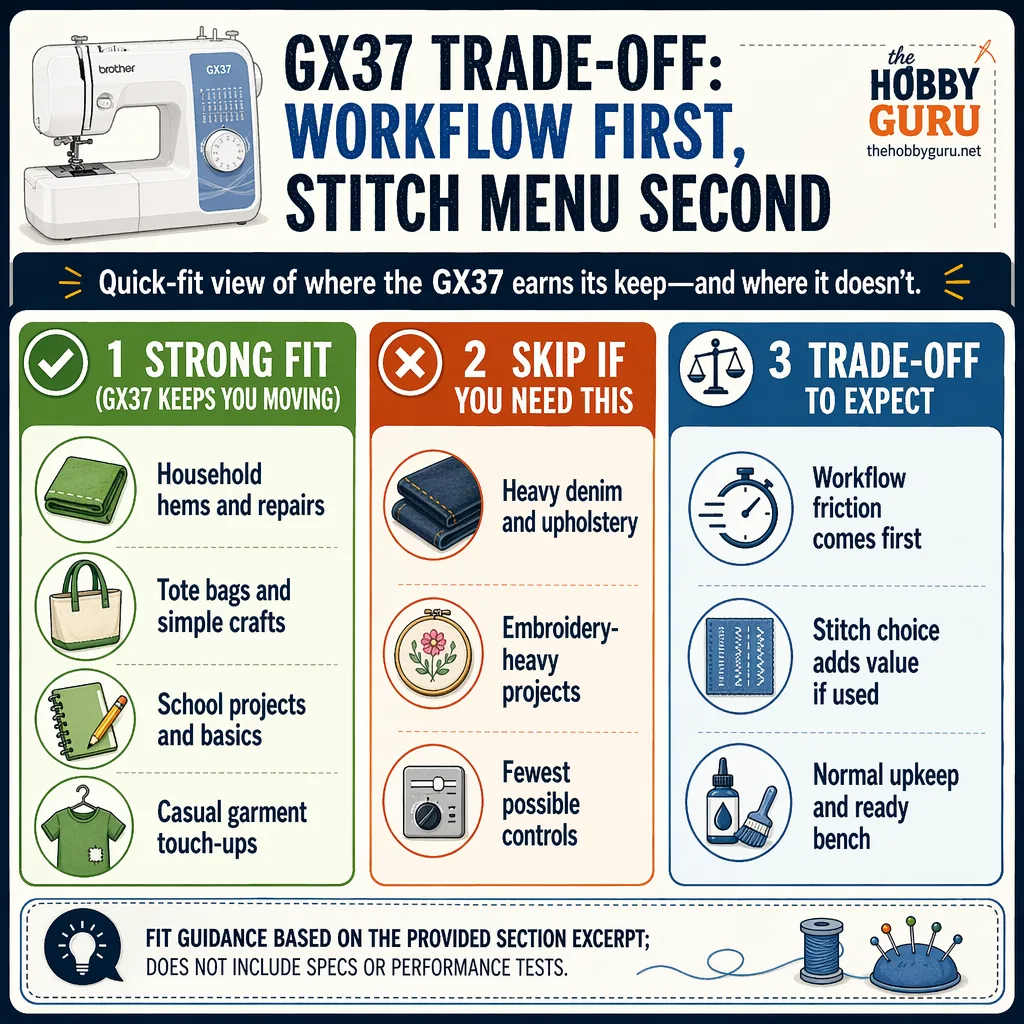
| Strong fit | Better to skip |
|---|---|
| Household repairs, hems, tote bags, simple craft sewing | Heavy denim, upholstery, embroidery |
| Buyers who use utility stitches often | Buyers who want only a bare-bones beginner machine |
| A ready bench and normal upkeep | A machine that has to do everything |
Best-fit scenario: a sewing bench that handles hems, school projects, tote bags, and casual garment repairs, with enough stitch variety to justify a slightly fuller control set.
Not the fit: sewing that depends on heavy layers, embroidery, or the fewest possible controls.
The GX37 earns its keep with a practical mix of simplicity and range. The trade-off is direct, extra stitch choice adds value only if the menu gets used.
How We Framed the Decision
The GX37 reads well on paper because it offers 37 built-in stitches and a familiar Brother layout. That still leaves the buying question unanswered, because stitch count never tells the whole story. The real filter is whether the machine keeps setup fast, maintenance light, and project changes simple enough that it gets used often.
That lens puts more weight on threading convenience, accessory bundle quality, and routine upkeep than on the headline stitch count. A machine that needs constant babysitting loses to a simpler model, even when the spec sheet looks richer.
Where It Makes Sense
Hemming, mending, and patch work
The GX37 fits everyday repairs because those jobs rely on consistency and a few utility stitches, not a giant feature list. The broader menu helps when a seam needs zigzag finishing or a specialized stitch from the box.
The drawback is simple, thick layers still ask more patience than this class of machine rewards. Buyers who sew denim cuffs, school uniforms, and torn seams will like the range, but they still need fresh needles and sensible thread choices.
Craft sewing and simple home projects
Tote bags, pillow covers, costume fixes, and fabric organizers sit in its comfort zone. The machine gives enough room to grow without pushing a buyer into computerized complexity.
The trade-off is that decorative stitch variety stops mattering once the project list stays basic. If the machine mostly sews straight seams, a slimmer beginner model removes decision fatigue faster.
A home bench that stays set up
This model makes sense when the machine lives near the workbench and gets used regularly. Fewer steps between storage and sewing keep the machine from becoming a chore.
That convenience matters more than flashy features in a hobby room. The downside is that a full-size home machine still needs protected storage and a clear table, so it does not solve space limits by itself.
Constraints to Confirm for Brother Gx37 Sewing Machine
The main constraint is bundle drift. Seller listings change accessory packs, and that changes first-day convenience more than the machine body does. A fuller bundle helps, but it never fixes a bad fit for heavy fabric or a buyer who only wants the simplest setup.
Before buying, confirm these details in the listing and manual:
- Included feet, bobbins, needles, foot pedal, and manual
- Exact bobbin and needle requirements before ordering spares
- Return policy if your first projects involve thick denim or layered seams
- Clear bench or shelf space, because this machine rewards ready access more than frequent moves
Maintenance stays modest only when small tasks happen on schedule. Dull needles, lint in the bobbin area, and the wrong thread create most frustration on a machine like this, not the stitch count. Buyers who want a set-it-and-forget-it machine miss that part of ownership.
What to Compare It Against
The cleanest nearby alternative is the Brother XM2701. It strips the menu down and keeps the first purchase simpler, which helps buyers who sew straight seams, hems, and occasional mends more than decorative or utility stitches.
| Model | Built-in stitches | Included feet | Best fit | Trade-off |
|---|---|---|---|---|
| Brother GX37 | 37 | 6 | Buyers who want a broader stitch menu for repairs, finishing, and casual projects | More choices add menu clutter if you only use basics |
| Brother XM2701 | 27 | 6 | Buyers who want a simpler first machine and fewer decisions at the bench | Fewer stitches limit flexibility for finishing and experimentation |
Choose the GX37 if stitch variety earns regular use. Choose the XM2701 if lower mental load matters more than the extra ten stitches. If the project list leans toward heavy denim, neither model solves that work.
Fit Checklist
Use this as the buy-or-pass filter.
- You want one machine for hemming, mending, and light craft sewing
- You will use utility stitches often enough to justify a broader menu
- You prefer straightforward upkeep over feature-heavy automation
- You are willing to confirm the accessory bundle before ordering
- You do not need embroidery or heavy-fabric throughput
If four or five are true, the GX37 belongs on the shortlist.
The Practical Verdict
Buy the GX37 if…
You want a beginner-friendly machine that leaves room for more than straight stitch work. The GX37 makes sense for a sewing bench that sees real use, because its extra stitches add practical range without pushing into intimidating complexity.
The trade-off is that you pay in menu management, not in performance excitement. That is a fair exchange for buyers who actually use utility stitches and simple finishing options.
Skip it if…
You want the lightest learning curve and a leaner first machine, because the Brother XM2701 handles that job with less decision-making. Skip the GX37 too if your plan centers on heavy seams, canvas, or upholstery, since that work belongs on a tougher machine class.
For general home sewing, the GX37 is the better buy only when those extra stitches will see routine duty.
Frequently Asked Questions
Is 37 stitches too much for a beginner?
No. The GX37 stays approachable because the extra stitches expand options without changing the basic sewing workflow. The trade-off is that a beginner who only sews straight seams and zigzags will ignore part of the menu.
Does the Brother GX37 handle denim?
It handles routine denim hems and light repair work. It does not replace a heavy-duty machine, so thick seam stacks and upholstery belong elsewhere. Keep fresh needles and the right thread in the machine.
Should I buy the GX37 or Brother XM2701?
Buy the GX37 if stitch variety matters in your actual project list. Buy the XM2701 if you want fewer choices, less setup friction, and a simpler first machine. The GX37 fits broader home sewing, while the XM2701 fits basic repairs and first projects.
What should I confirm before buying?
Confirm the accessory bundle, the manual, and the exact consumables the machine uses. Those details decide how smooth the first week feels, and seller bundles change enough that one listing often gives a better start than another. A thin bundle does not ruin the machine, but it does add a trip for extras.
Is maintenance a big issue on this model?
Routine maintenance stays manageable, but it never disappears. Clean lint, replace needles on schedule, and keep thread choices sensible. The machine rewards that basic care more than it rewards chasing extra stitches.
See Also
If you are weighing this model, also compare it with Brother GS2700 Sewing Machine Review: What to Know Before You Buy, Singer 2263 Sewing Machine Review: What to Know Before You Buy, and Warhammer 40K Ultimate Starter Set Review: A Legacy 10th-Edition Box.
For broader context before you decide, Knit Stitch vs Purl Stitch: Which One Should You Use for Your Project? and Janome Memory Craft 400E Review: A Focused Embroidery Machine for Home Use help round out the trade-offs.