The Singer 2263 Sewing Machine is a sensible buy for beginner sewing, quick repairs, and small hobby projects, not for thick fabric stacks or buyers who want computerized guidance. The answer changes fast if the main jobs are denim hems, canvas repairs, or frequent quilting layers. It also changes if a buyer wants a wider stitch library or a heavier machine built for repeat hard use. For those jobs, a different model fits better.
Quick Buyer-Fit Read
Most guides chase stitch counts. That is the wrong metric here, because the 2263 earns its keep by keeping setup short and the control path simple.
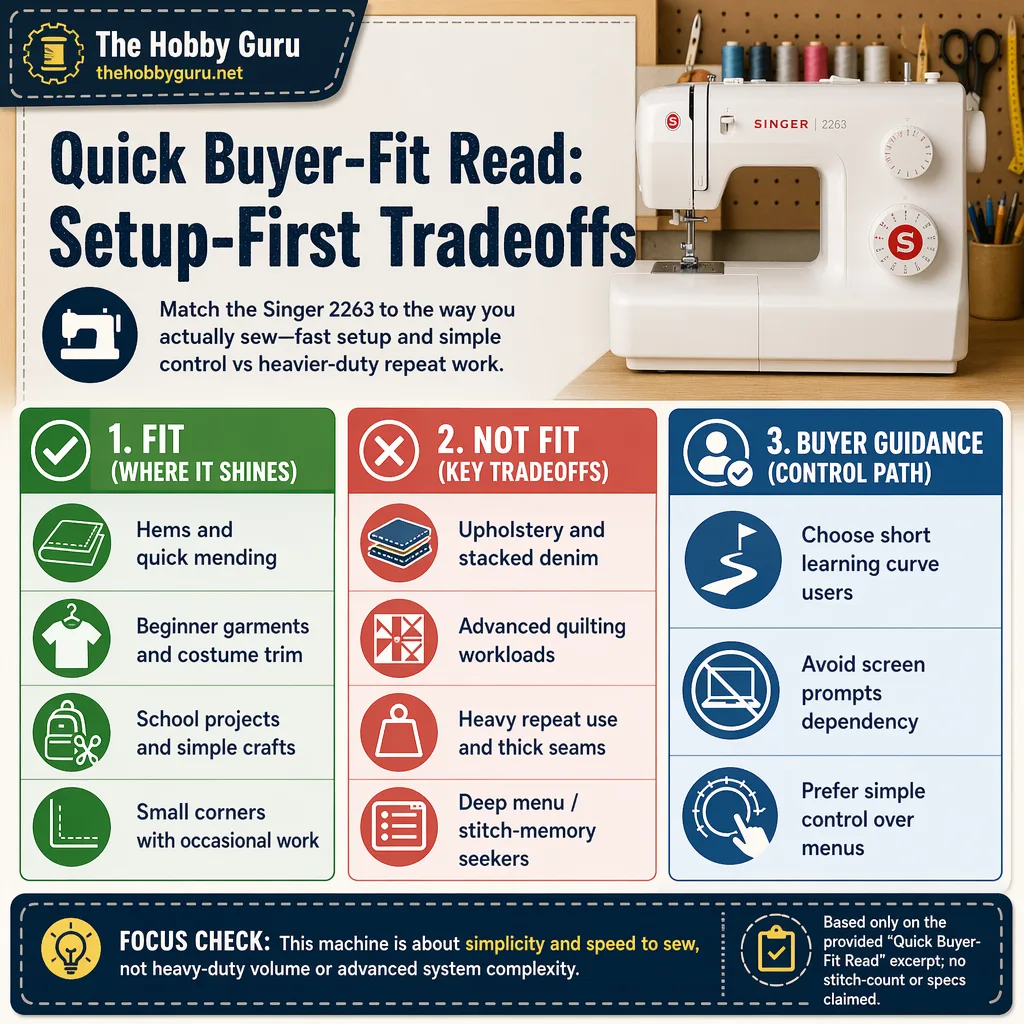
| Fit | Not Fit |
|---|---|
| Hems, mending, beginner garments, costume trim, school projects, simple craft sewing | Upholstery, stacked denim, advanced quilting, buyers who want screen prompts or stitch memory |
| Small sewing corners and occasional project work | Heavy repeat use and thicker seam piles |
| Users who want a short learning curve | Users who want a deep feature menu |
Strengths that matter
- Straightforward mechanical controls.
- A practical stitch set for everyday sewing.
- Simple upkeep when the bobbin area stays clean and the needle stays fresh.
Trade-offs to accept
- Limited automation.
- A smaller presser-foot path than richer beginner kits.
- Bundle contents that need checking before checkout, especially on open-box and used listings.
What We Checked
This analysis leans on published feature lists, accessory descriptions, and recurring customer-feedback themes. The useful question is not whether the machine sounds beginner friendly, it is whether the feature mix lowers friction for projects that happen at a home workbench.
The decision comes down to four things: stitch utility, presser-foot coverage, accessory completeness, and maintenance burden. That last point matters more than many product pages admit. A basic machine that needs frequent thread rework, lint cleanup, or missing-foot replacements costs time every time it comes off the shelf.
Types of Stitches on the Singer 2263 Sewing Machine
Published listings place the 2263 at 23 built-in stitches, with coverage centered on utility sewing, stretch work, decorative accents, and a one-step buttonhole. That mix handles the jobs most hobby sewers actually finish: hems, repairs, seams, topstitching, and simple garment closures.
| Stitch group | Practical use | Buying meaning |
|---|---|---|
| Utility stitches | Seams, hems, repairs, general construction | This is the core value of the machine |
| Stretch stitches | Knit hems and flexible seams | Useful for T-shirts, leggings trims, and activewear repairs |
| Decorative stitches | Edge accents and simple finish work | Nice to have, not the reason to buy this model |
| One-step buttonhole | Shirts, cuffs, and basic garment closures | Saves time on a common clothing task |
The common misconception is that a beginner machine needs a huge stitch menu. That is wrong because straight stitch, zigzag, stretch, and buttonhole work cover most home sewing jobs. More stitches add visual variety, but they do not fix a weak setup, poor tension, or a mismatch between the machine and the fabric stack.
The limit is clear. If decorative sewing or complex quilting drives the purchase, the 2263 runs out of room faster than a computerized machine with a broader stitch bank.
Singer 2263 Presser Feet
Presser feet matter more than stitch names because the foot decides whether a zipper, hem, or buttonhole feels orderly or awkward. On a starter machine like this, the useful question is which feet arrive in the box and which ones sit on the shopping list.
The practical baseline is a general-purpose foot for most seams and a buttonhole foot for closures. A zipper foot belongs on the shortlist if garment work sits near the top of the project stack. Specialty feet for quilting, piping, or bulky seams change the machine’s usefulness far more than a long decorative stitch list does.
The trade-off sits in bundle variation. Sellers do not always ship the same accessory kit, and missing feet turn a budget-friendly listing into a piecemeal purchase. Verify the exact foot set before buying, especially on secondhand listings where the small parts disappear first.
Singer 2263 Features and Functionality
The 2263 stays attractive because its features support simple repeat use instead of chasing flash. Mechanical controls keep the learning curve short, and the basic layout keeps the machine from feeling overbuilt for occasional hobby work.
| Feature | Practical benefit | Trade-off |
|---|---|---|
| Mechanical stitch selection | Fast, direct control with fewer menus | Less guidance and no digital memory |
| Drop-in bobbin | Easy thread loading and quick checks | Needs regular lint cleaning |
| Free arm | Cleaner work on cuffs, sleeves, and narrow hems | Still awkward on very small circular pieces |
| Adjustable stitch length and width | Better control for hems, repairs, and stretchy seams | Manual dialing takes attention |
| Reverse stitching | Secure seam starts and ends | Another control to learn before a first project |
Setup friction matters here. A simple machine rewards fresh needles, clean thread paths, and scrap-fabric tension checks. Skip the habit of loading thread and going straight to the final fabric, because beginner frustration shows up fastest on a machine that is asked to do too much without a practice pass.
Setup and caution checklist
- Replace the needle before denim, elastic, or any seam-heavy project.
- Clean lint from the bobbin area on a schedule.
- Test stitch length and tension on scraps before cutting the final fabric.
- Match the foot to the task before starting a zipper or buttonhole.
- Keep spare bobbins and a few needle sizes on hand.
Singer 2263 Sewing Machine Accessories
Accessory value sits in cheap, replaceable parts. That sounds minor until a missing bobbin, blunt needle, or wrong foot slows a project and adds a store run to the job.
| Accessory | Why it matters | Buying note |
|---|---|---|
| Extra bobbins | Faster thread changes and fewer interruptions | Verify the correct bobbin style before ordering spares |
| Needles in a few sizes | Better results across cottons, knits, and lighter blends | Fresh needles solve more problems than most beginners expect |
| Seam ripper and lint brush | Easier cleanup and correction | These small tools disappear often, so keep backups |
| Spool caps and screwdriver | Stable setup and maintenance | Missing tiny parts create the most annoyance |
| Specialty feet | Zippers, edge work, and project-specific control | Check the bundle before buying, not after the first project |
The machine itself is only half the cost story. A bare listing looks cheap until the missing pieces add up. That matters on the secondhand market, where the accessory drawer decides whether the machine is ready to sew or ready for another shopping trip.
Customer Reviews and Ratings for the Singer 2263
Customer feedback tracks closely with project ambition. Buyers who want a starter machine praise the simple controls and manageable stitch set. Buyers who expect a heavier all-purpose machine complain about tension setup patience, limited muscle on thicker stacks, and accessory bundles that differ from listing to listing.
What buyers praise
- Easy learning curve for first-time sewing.
- Useful basic stitch coverage for repairs and simple garments.
- Straightforward control layout that does not feel crowded.
What buyers complain about
- Threading and tension setup demand attention.
- Thick seams expose the machine’s limits quickly.
- Bundle inconsistency frustrates buyers who expect every foot and accessory in the box.
The star score tells less than the comment pattern. A machine like this lands differently for someone hemming school pants than for someone building bags or sewing layered canvas. That gap explains why some listings look well reviewed while certain buyers still walk away unhappy.
Constraints to Confirm for Singer 2263 Sewing Machine
This is the listing-check section that saves return shipping.
- Verify the exact foot bundle, especially the zipper foot and buttonhole foot.
- Verify the pedal, power cord, and manual in new or used boxes.
- Verify the bobbin style before ordering extras.
- Verify that the seller’s photos show the accessory tray, bobbin cover, and presser-foot hardware.
- Verify that the project list stays inside light to medium fabrics.
Used listings need extra attention because small missing parts change the actual price. A clean machine with an incomplete kit lands worse than a slightly worn machine with everything in place. That is the practical test here, not cosmetic polish.
How It Compares With Alternatives
The 2263 sits in the middle of the beginner field. It offers more guidance than a bare-bones mechanical machine, but less automation than a computerized beginner model.
| Alternative | Better for | Where it beats the 2263 | Where it loses ground |
|---|---|---|---|
| Singer Heavy Duty 4423 | Denim, canvas, and thicker repair work | Stronger fit for tough fabric stacks | Less appealing for buyers who want the simplest beginner layout |
| Brother CS7000X | Stitch variety and guided beginner convenience | More automation and a broader stitch menu | More machine than a shopper needs for plain hemming and mending |
| A very basic straight-stitch mechanical machine | Pure mending and fast hems | Even simpler control path | Not versatile enough for small garment variety |
Buy the Heavy Duty class machine if thick seams sit at the center of the table. Buy a computerized Brother if stitch menus and digital convenience matter more than a simple control set. Buy the 2263 only if straightforward sewing matters more than expansion.
Buyer-Fit Checklist
Use this as the last pass before checkout:
- Most projects are hems, mending, beginner garments, costumes, or simple craft sewing.
- Thick denim, upholstery, and layered canvas are not the main workload.
- A 23-stitch mechanical layout covers the work without extra menus.
- A starter accessory kit is enough, or replacement feet are easy to budget for.
- Regular needle changes and bobbin-area cleaning fit the routine.
- The listing includes the cord, pedal, manual, and feet needed for the first projects.
If three or more of those boxes stay unchecked, move to a heavier or more automated model.
Bottom Line
The Singer 2263 makes sense for a beginner or casual hobby sewer who wants a plain mechanical machine with enough stitch variety for repairs, hems, and simple garments. Skip it for denim-heavy work, upholstery, or buyers who want programmable convenience and a larger accessory ladder. The machine earns recommendation only when simplicity is the point, because that simplicity lowers setup friction and keeps maintenance small.
FAQ
Is the Singer 2263 good for beginners?
Yes. The mechanical controls and limited stitch menu keep the learning curve short, and the one-step buttonhole handles a core garment task without menu hunting. Buyers who want on-screen prompts should pick a computerized alternative.
What fabrics does the Singer 2263 handle best?
It handles cotton, basic garments, mending, and light knits best. Dense denim seams, upholstery, and layered canvas belong on a stronger machine.
Which presser feet matter most?
The general-purpose foot and buttonhole foot matter first, then a zipper foot if garment work is part of the plan. Verify the exact bundle before checkout because seller kits differ.
What accessories should be bought with it?
Extra bobbins, fresh needles, a seam ripper, and a lint brush belong at the top of the list. Specialty feet come next if the project list includes zippers, piping, or more precise edge work.
Is a used Singer 2263 a smart buy?
Yes, if the listing includes the pedal, power cord, manual, and the feet needed for the projects on deck. A stripped bundle turns a bargain into a slow, piecemeal purchase.
See Also
If you are weighing this model, also compare it with Brother GS2700 Sewing Machine Review: What to Know Before You Buy, Brother GX37 Sewing Machine Review: What to Know Before Buying, and Warhammer 40K Recruit Edition Review: A Retired 9th-Edition Starter.
For broader context before you decide, Continental Knitting vs. English Knitting: Head-to-Head Comparison and Janome Memory Craft 400E Review: A Focused Embroidery Machine for Home Use help round out the trade-offs.